



Almost every day, I find myself playing the original 2001 Super Monkey Ball, and I must admit, I'm quite skilled at it. Whether it's to kickstart my mind in the morning, relax during lunch, or pass some time in the evening, this game is my go-to. I typically opt for the Expert difficulty with its fifty stages, challenging myself to see how far I can progress without needing a continue. There's no specific goal—I'm simply enjoying one of the finest games ever created.
The brilliance of Super Monkey Ball is such that neglecting it feels like an injustice. The game is near perfect in both feel and appearance, and it's incredibly intuitive: spend just five seconds with it, and you'll grasp its entire design. You're a character in a ball, aiming for a goal at the end of a floating obstacle course, all while a timer counts down. Use the control stick to move. That's all there is to it. Every element onscreen, from the level's layout to the character's animations and the HUD, is crafted with precise utility, delivering complex information while keeping the player's focus centered.
This focus is vital because Super Monkey Ball requires complete, unwavering attention. It's a molecular video game. The movement, which occupies nearly all of the game's mechanical space, is so precise that a minor two-millimeter shift of the control stick can instantly alter (or ruin) your approach to any obstacle. In my two decades with Super Monkey Ball, no two runs have felt alike. Even stages I've navigated hundreds of times continue to offer new, unexpected, thrilling challenges. In another game, this would be impressive. In a game with just one action, it's remarkable.
Buy Super Monkey Ball: Banana Rumble: Amazon | Best Buy | Humble Bundle
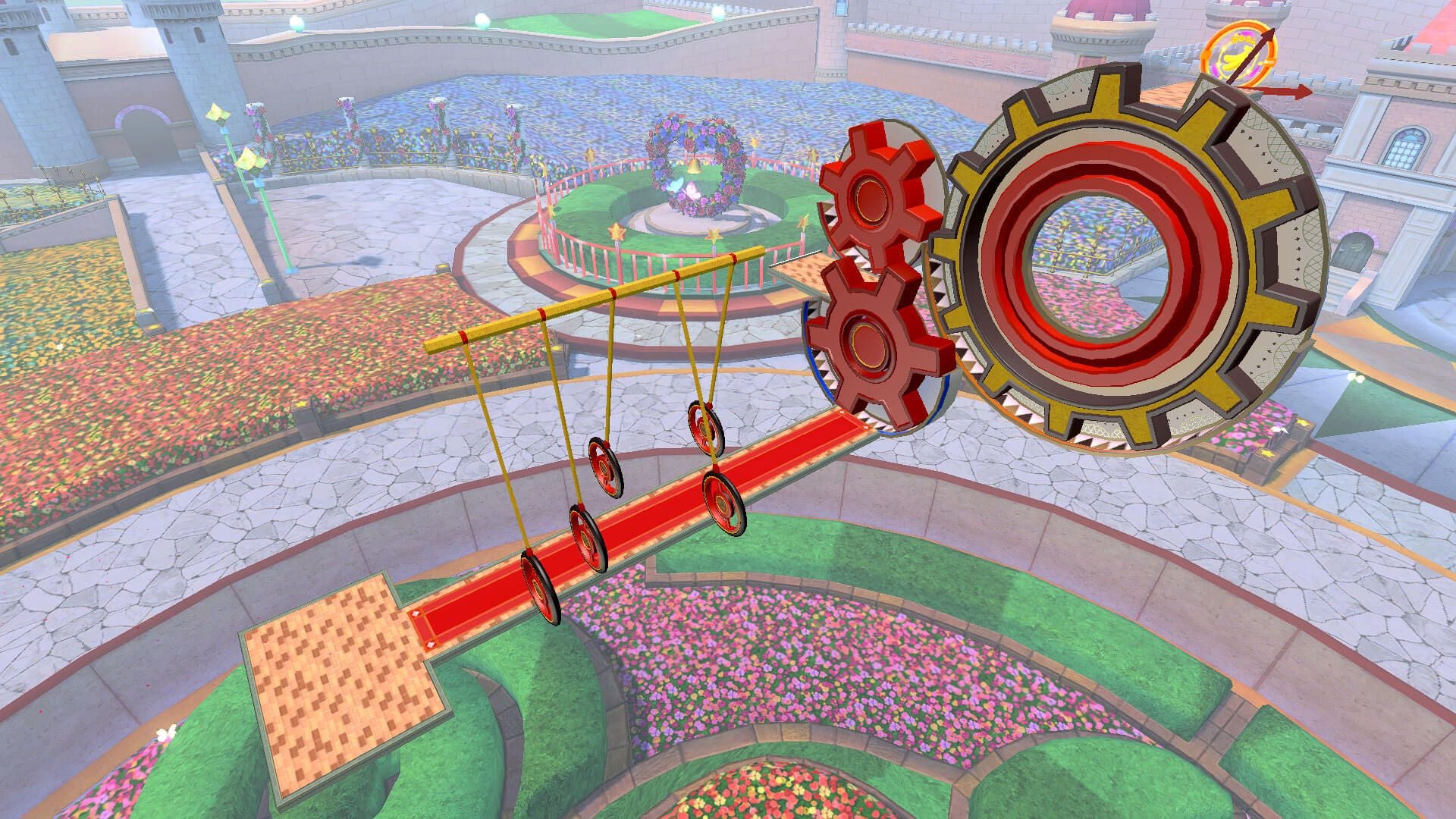
It's a tough act to follow. Shortly after the 2002 release of Super Monkey Ball 2—a fantastic game, albeit slightly marred by its emphasis on mazes and puzzles rather than core platforming—the series began to falter. Except for a few minor highlights (looking at you, 2012's Super Monkey Ball: Banana Splitz), the series has mostly been on a decline, each new entry straying further from the creativity and precision of the GameCube originals. I was nearly ready to give up after 2021's Super Monkey Ball: Banana Mania, a remake of the first two games that altered their physics, flattened their structure, removed multiplayer modes, and introduced numerous control and camera issues.
Then, out of the blue, comes Banana Rumble, the first new series entry since 2012 that isn't a remake. I approached my review copy with cautious optimism, having been let down before. Imagine my relief when it turned out to be the finest Super Monkey Ball game in over twenty years.
The Meat
In nearly every meaningful way, Banana Rumble returns to basics. No more jumping, no more excessive minigames, no more micromanaging the camera. Motion controls are an option but are disabled by default, hidden away in a complex options menu.
The very existence of a detailed options menu should be a relief to anyone frustrated by Banana Mania's lack of customization. Rest assured, seasoned players: Banana Rumble allows for adjustments to, among other things, input display, automatic camera speed, manual camera speed, stick dead zones for both character and camera control, stage tilt severity, and stage tilt speed. (I tested these last two, and they seem to have no effect on physics.) If you prefer a more traditional setup, you can disable the manual camera entirely and set automatic tracking to the max, just like the classic Monkey Ball experience.

Right from the start, much of this game feels like the classic Monkey Ball, albeit with some major tweaks—mostly for the better, occasionally for the worse. The heart of the game is Adventure Mode: 200 short platforming challenges, each lasting no more than sixty seconds. These are evenly divided into twenty worlds, with the first ten forming the story and the remaining ten for "the real enthusiasts." (True to series tradition, the story is delightfully silly, and I spent the whole game wishing it would just fade away. We’re back, baby!)
Super Monkey Ball thrives on the quality of its level design. At its peak, each stage nudges you toward a deeper understanding of the game's physics, with difficulty escalating in tandem. At its worst, you get something like Super Monkey Ball 3D, where every level is a flat, uninspired maze that fails to teach you anything significant. Thankfully, Banana Rumble mostly falls into the former category. Some stages prioritize puzzles over raw execution, but even then, there's an impressive lack of uniformity. Levels feel unique and, for the first time in a long time, genuinely challenging. Banana Rumble actually cares about your playstyle; it encourages you to meticulously consider every curve, edge, and gap in its design.
The game introduces one crucial movement addition that fundamentally changes this dynamic: the spin dash, a clear homage to Sonic the Hedgehog's iconic move. In Sonic, spin dashes let players build momentum from a standstill, with speed dependent on how many times a button is rapidly pressed. Before Banana Rumble's release, I assumed its spin dash would function similarly, and I was concerned. Much of Super Monkey Ball's tension arises from how it challenges players to navigate slopes, and the ability to quickly reverse direction with a burst move could, if not eliminate that tension, significantly reduce it.
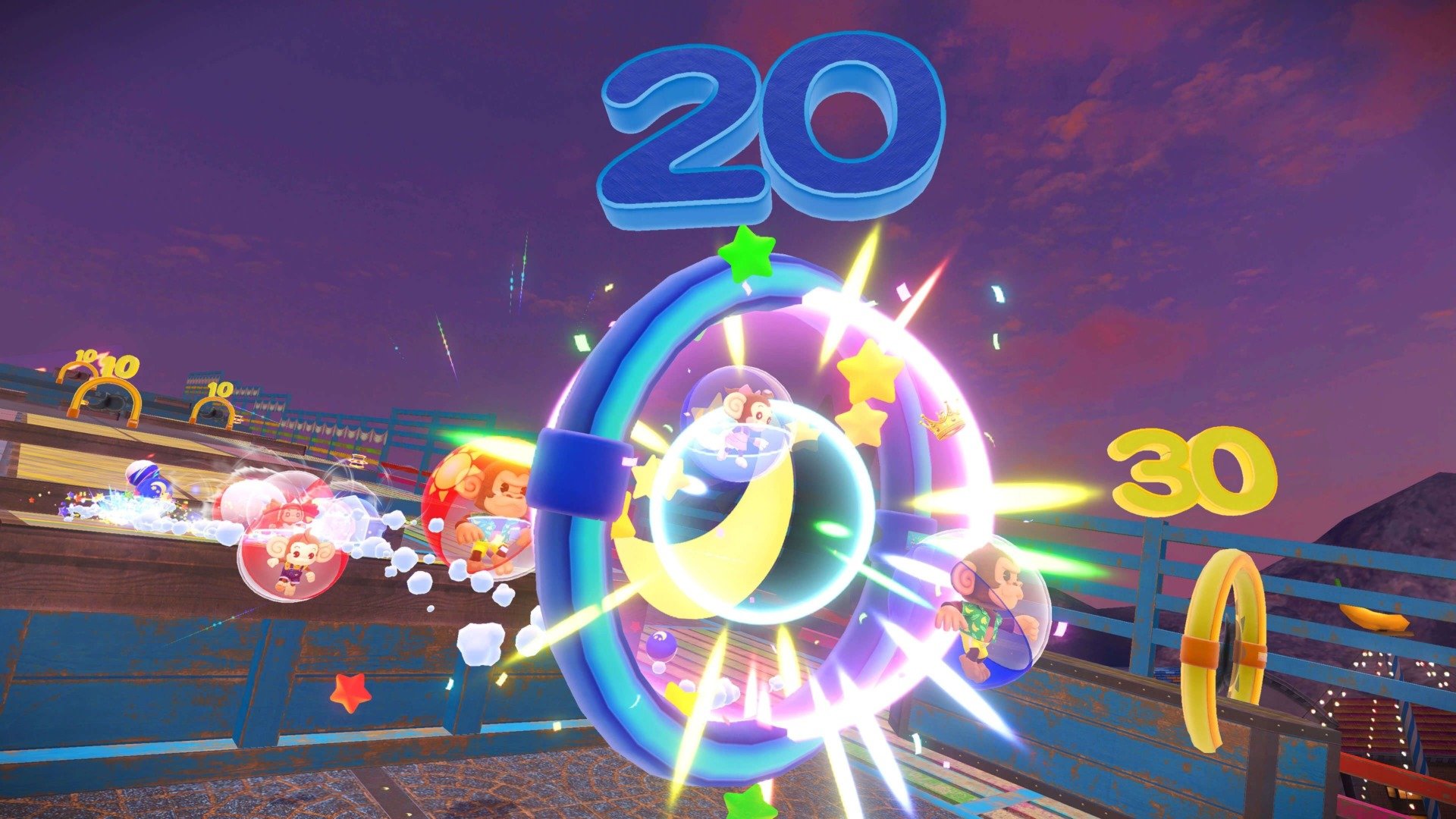
Thankfully, the developers at Sega were a step ahead. The spin dash in Banana Rumble is a momentum extender, not a generator. Try using it while stationary, and it won't move you. You need to be in motion, and once you've gained some speed, the spin dash propels you even further. It's a clever little nesting doll of commitments.
I'm still uncertain if this series truly needs anything beyond its core control scheme. The purist in me wants to criticize the spin dash, regardless of its implementation—why complicate something so pure? But perhaps I'm approaching this the wrong way. Maybe it's not about what Super Monkey Ball needs, but what it wants. Super Monkey Ball requires a ball, a level, and a timer, much like we need food, water, and shelter. But what it wants is momentum. It wants you to seamlessly chain multiple precise inputs into smooth, fluid propulsion, and it wants you to commit to that propulsion. No time to hesitate; roll with it and see where it takes you. The spin dash aligns perfectly with this ethos. If this were the first Super Monkey Ball game, I'd probably want it to appear in all future installments as well.
And it's not as if Banana Rumble doesn't capitalize on the spin dash's potential. Many levels are explicitly designed around it, and even more subtly incorporate it. Once I began using the dash more liberally, launching monkeys through the air just to see where they'd land, the game revealed its true nature. There are shortcuts hidden in every nook and cranny of Banana Rumble if you know where to look. Finding alternative solutions to courses has always been one of the most rewarding challenges of Super Monkey Ball, and here we have a game built from the ground up for it. At times, these shortcuts may feel cheap, but for every level trivialized by the spin dash, there are ten more that require precise, high-stakes applications of it.
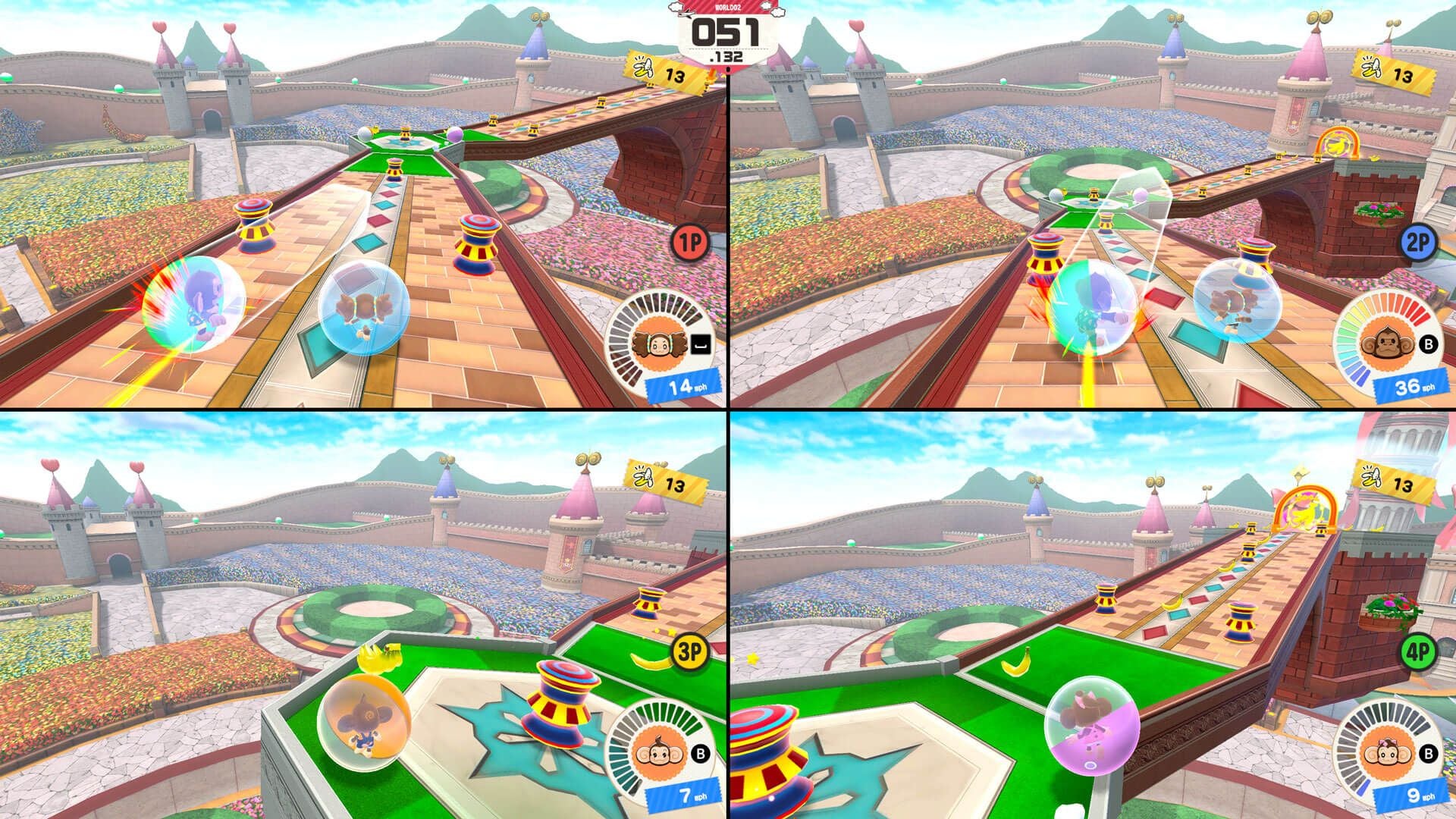
Complementing Banana Rumble's core modes are several multiplayer games, only a few of which resemble past series favorites. Gone are Monkey Golf, Monkey Bowling, Monkey Billiards, and—sigh—Monkey Target. Monkey Race (now simply "Race") returns, along with others that seem like attempts to appeal to the Fall Guys platformer-as-battle-royale crowd. None are particularly captivating, though they automatically surpass Fall Guys by not making you feel like you're slogging through a tar pit. I appreciate that these minigames retain and iterate upon Banana Rumble's core movement (including the spin dash) rather than adopting entirely new control schemes (as was the norm in past Super Monkey Ball games), but they all end up feeling a bit similar. Race, the most straightforward, is also the best for that reason.
Super Monkey Ball: Banana Rumble
-
Back of the box quote
“Fun enough to play, good enough to like.”
-
Type of game
Ball rolling; you roll a ball.
-
Liked
Inventive, rigorous level design, momentum-first platforming, replayability.
-
Disliked
Lack of an arcade mode, misguided progression, occasional tedium.
-
Played
7 hours to complete the 200 main stages, 20 more hours of hanging out.
The true highlight here is the multiplayer Adventure Mode, making a triumphant comeback (now with online functionality) after a lengthy absence. This mode has always been a great showcase for the series' versatility: put multiple players in the same course side-by-side, and their approaches will diverge in countless subtle ways. Skill matters, of course, but personal expression even more so. With enough players, it's a conversation.
The Potatoes
The original Super Monkey Ball is an arcade game. This is true both literally (the game was first released as an arcade cabinet several months before it arrived on the GameCube) and in its structure. Its progression systems demand a deep understanding of how its levels work not only individually but collectively: avoiding a game over on higher difficulties requires meticulous strategies that maximize both efficiency and banana collection (100 bananas grant an extra life, and for my money, it has one of the best 1-up sound effects in the medium). For instance, certain levels can be skipped with warp goals, but doing so might leave your banana count lacking—something you'll regret when you're precariously balancing on a narrow path with ten seconds left and no lives remaining. These competing tensions foster a comprehensive understanding of the game. Mastering it means mastering all of it.
2024's Banana Rumble is not an arcade game, because arcade games aren't really made anymore. Like every Super Monkey Ball that isn't an arcade game, it works hard to redefine and justify its design outside an arcade context. There are no game overs, because there are no lives. There are no high scores, because stages are played in isolation rather than as a cohesive group (except for time attack mode, which I love, though it doesn't do much to make the stages feel interconnected). Yet, the game still tracks bananas and your best times.
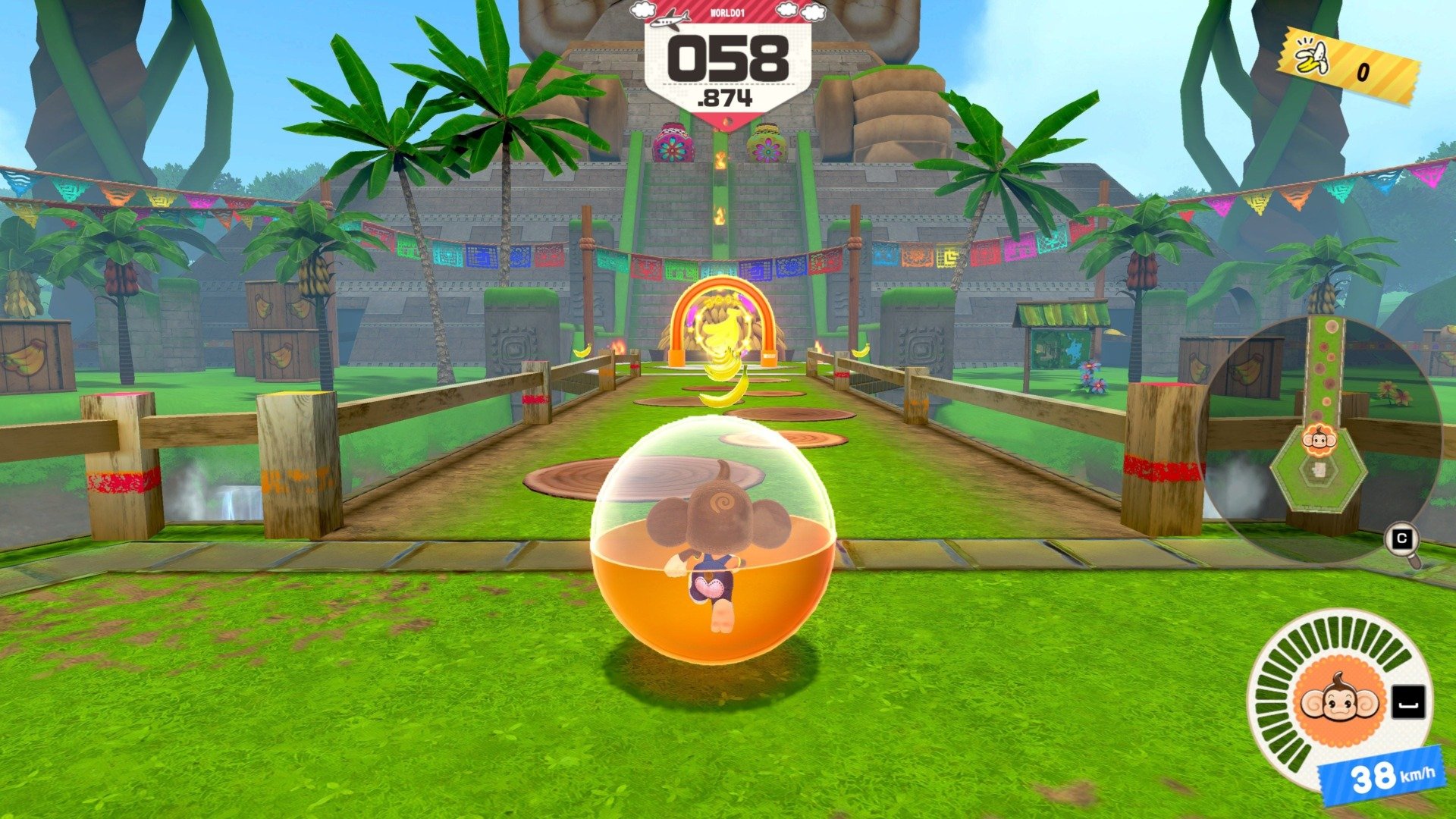
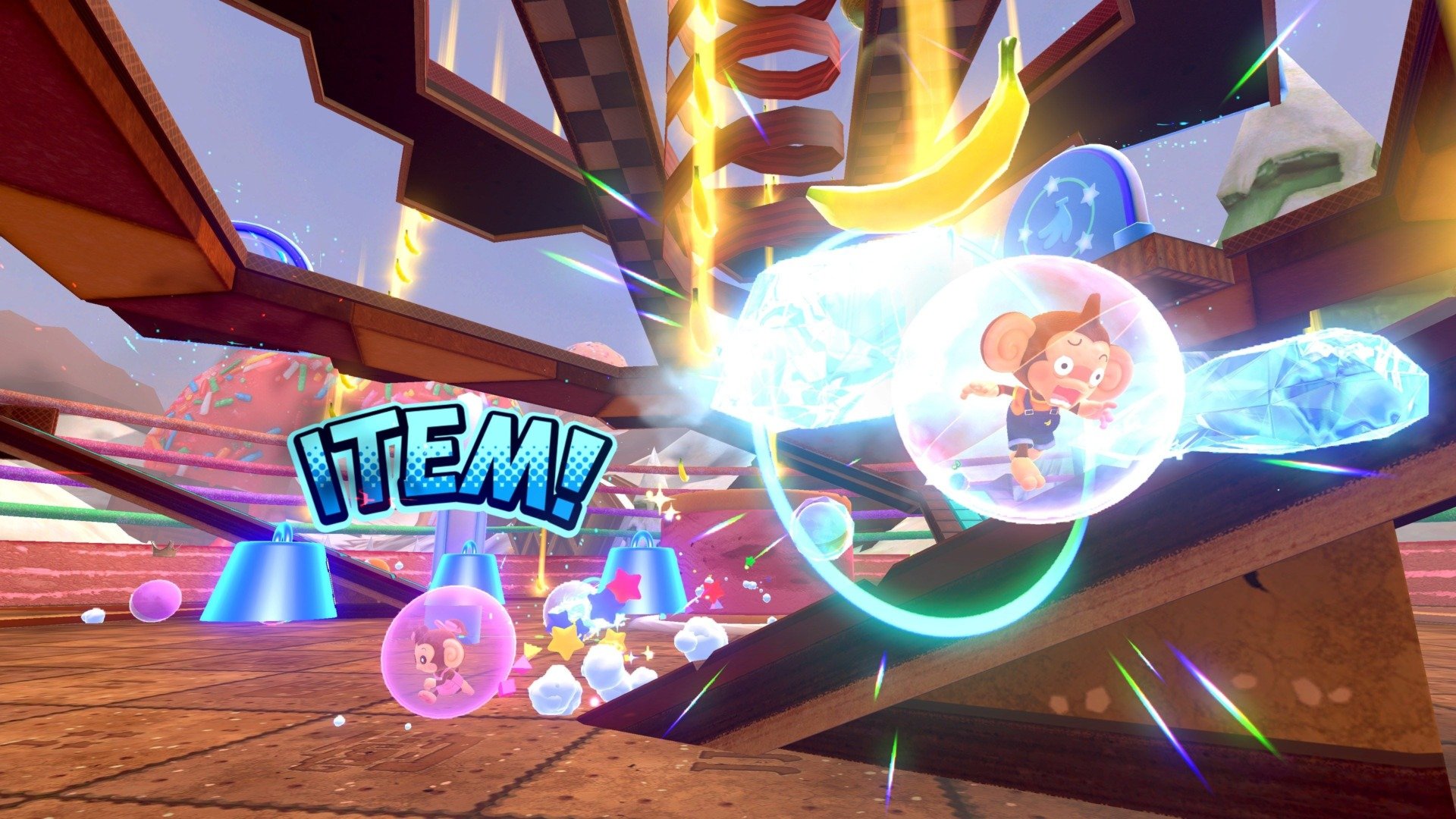
It tackles this in two ways, the first being quite clever. Each level now includes three sub-challenges (dubbed "missions"): a par time, a par banana count, and a single "golden banana" placed in a particularly tricky spot. Depending on which one you pursue, your approach to the level will fundamentally change, in ways that almost recall the experience of navigating classic Super Monkey Ball difficulties. It's a bit disappointing that the game has to prescribe these challenges rather than letting them emerge organically; on the other hand, it also means each level effectively has three smaller levels within it, and I was consistently impressed by how much they required me to adjust my strategy.
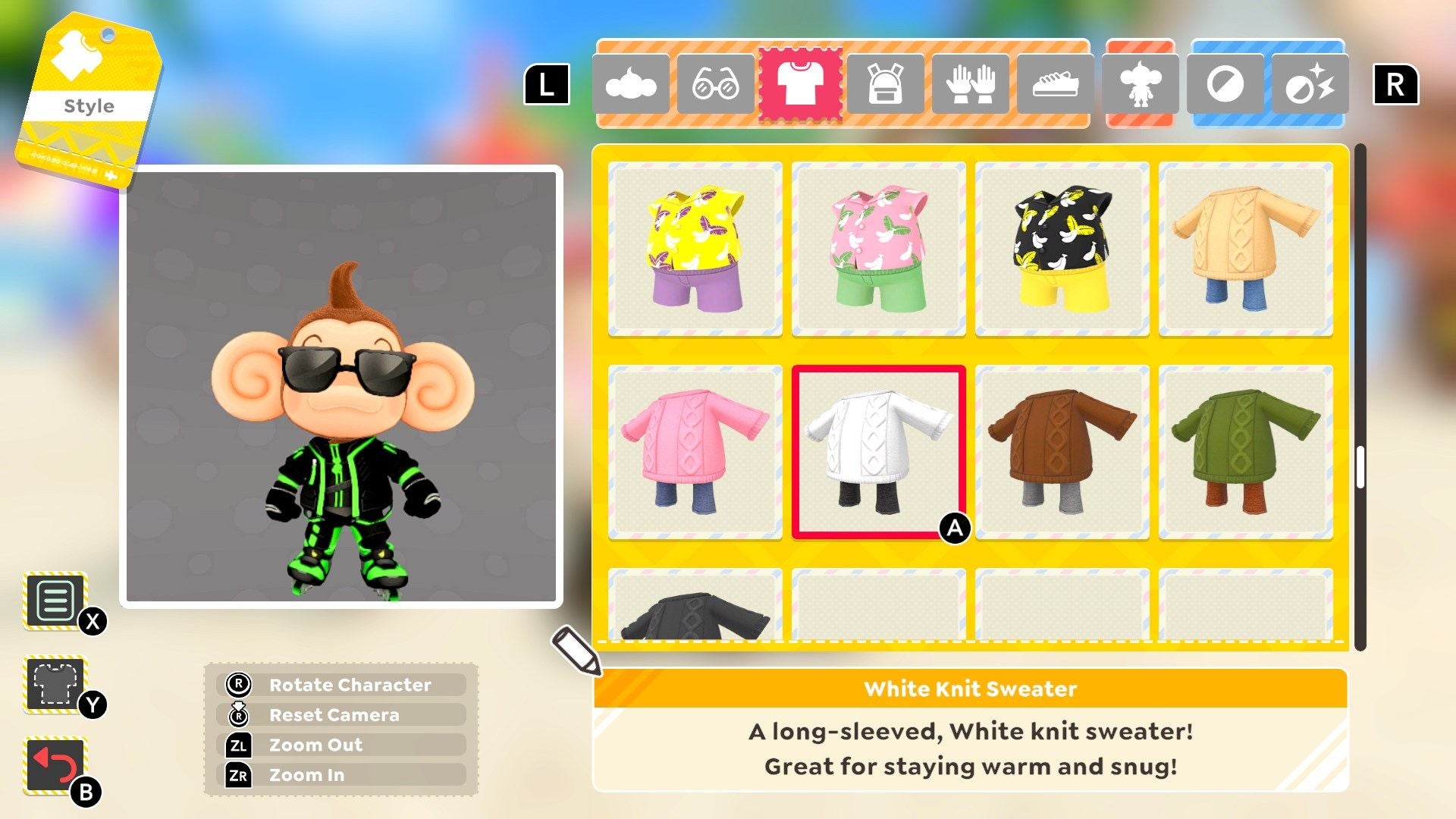
The second solution is a bit less elegant. Instead of a traditional scoring system, Banana Rumble awards points based on story and mission completion. These points are primarily used as currency in an in-game cosmetics shop, where you can dress up your characters, purchase new frames for photo mode, and generally achieve little else. This, frankly, feels meaningless, and I can't help but feel conflicted about the fact that most of the game's progression ends here, in something almost entirely detached from the skills and knowledge it asks you to develop elsewhere. Banana Rumble dangles the carrot, only to reveal it's actually cotton candy; the last thing a game this streamlined needs is empty calories.
We've established what Super Monkey Ball needs; we've established what Super Monkey Ball wants; now, finally, we arrive at the million-dollar question. What do I want? On some level, I know I just want the first Super Monkey Ball. I want elegantly paced arcade modes and intrinsically meaningful scoring systems and an unadulterated, elemental control scheme. I don’t want partitioned stages or games-as-a-service-adjacent cosmetics shops or a dozen different characters with unique stat spreads.
But these are all trees; what about the forest? What precisely about Super Monkey Ball makes me return to it day after day, year after year? The answer is embarrassingly simple: it's a fun video game. What I really want when I play Super Monkey Ball is to play a fun video game. And what better choice? Super Monkey Ball is the distilled essence of fun video games. It lets you do one thing, and that thing is fun, to the greatest extent that any one thing in a video game could be.
Banana Rumble is fun. I love playing it. I thought I was mostly done playing it until, about 300 words into this review, something unexpected happened: I got The Itch. I'd beaten all the levels, but I wanted to beat them again. I wanted to take a crack at the missions, which I'd largely dismissed as frivolous on my first run. I wanted to go for some records in time attack, especially pre-release, when the sparse competition would all but guarantee me a spot in the top 5. (As of right now, 6:03 a.m. on June 23rd, 2024, I have Giant Bomb's Dan Ryckert beaten by two seconds on the world 1 leaderboards. Dan, if you're reading this: your move.) The game works, in all the ways I expect it to. Maybe not in all the ways I want it to, but so what? Banana Rumble doesn't need to be perfect. It just needs to be good. And for Super Monkey Ball, "perfect" and "good" are very nearly the same thing.
Buy Super Monkey Ball: Banana Rumble: Amazon | Best Buy | Humble Bundle
.


