



How can a developer follow up on a game like 2023’s Alan Wake 2? How do you build upon a survival horror game rich with meta-commentary on art and its own challenging path to release, featuring remarkably daring themes and genre-defying moments that secured several prestigious game awards? If you’re developer Remedy, you take a complete turn, which is precisely what Night Springs represents—a Twilight Zone parody consisting of three anthology tales loosely connected to the main game and serving as the first of two DLCs for Alan Wake 2. And it’s an absolute delight. Even if a story doesn’t fully resonate, Night Springs makes a compelling case for studios to produce shorter, yet still high-quality, AAA-level experiences.
Initially, I wasn’t overly excited about the prospect of Night Springs when it was announced. The three anthology episodes within the DLC are essentially non-canonical to the broader Remedy Connected Universe (which encompasses both Alan Wake games and 2019’s Control), and although it features familiar characters from the main game, it doesn’t really continue or expand upon their narratives. After the impactful experience of Alan Wake 2 (my favorite game of 2023), I wasn’t eager to delve into something that didn’t advance that storyline. And to some extent, I was correct. Overall, Night Springs doesn’t build upon the narrative threads of the main game (with one significant exception that I’ll discuss), but I was mistaken in assuming that this approach would be dull. Night Springs serves as a much-needed respite from the intense main game, a perfect palate cleanser.
Buy Alan Wake 2 Deluxe Edition: Amazon | Best Buy | Humble Bundle
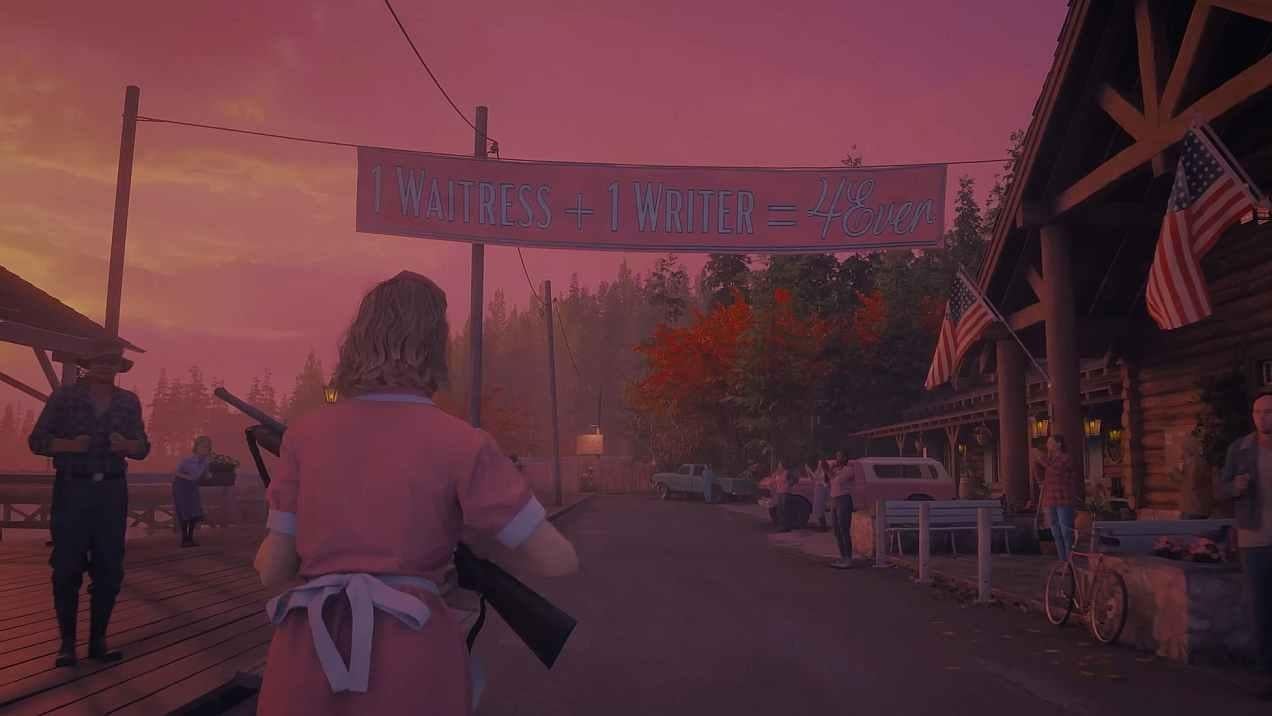
This is best demonstrated by the DLC’s opening chapter, “Number One Fan,” which follows the Oh Deer Diner’s waitress, Rose. Naturally, within the context of the in-game show Night Springs, she isn’t exactly Rose, but rather just The Waitress. After making her rounds at the diner—pouring coffee, serving her renowned pie, and dispensing tough yet fair life advice to strangers—she contacts The Writer, with whom she is romantically involved. The Writer, speaking through a talking fish wall decoration, informs her that she must save him from his evil twin, prompting her to grab an automatic shotgun and embark on her mission. The Waitress’s demeanor is filled with such exaggerated cheerfulness that it’s impossible not to laugh, and this absurdity permeates every corner of the DLC—even its loading screens, which change based on the episode you’re playing. In “Number One Fan,” the loading screens assure you that with the power of love, anything is possible! This, combined with the literal rose-tinted hue of the world around you, starkly contrasts with the dark and gritty main game. The fully automatic shotgun only adds to the absurdist atmosphere, making combat both trivial and amusingly gory. Remedy is telling you that this experience shouldn’t be as challenging or stressful as the main game. Have fun! Battle the guy who transforms into a wolf and rides a motorcycle (which also transforms into a wolf). Before you know it, the 30-45 minute experience is over.
All of Night Springs episodes have similarly short runtimes—you can complete the entire thing in one leisurely evening if desired. They maintain the same high production value as the main game but require only a fraction of the time. It’s another indication from Remedy that these are intended to be small, enjoyable adventures to tackle at your convenience. It makes me wish more AAA games would offer smaller experiences that look and play this well.
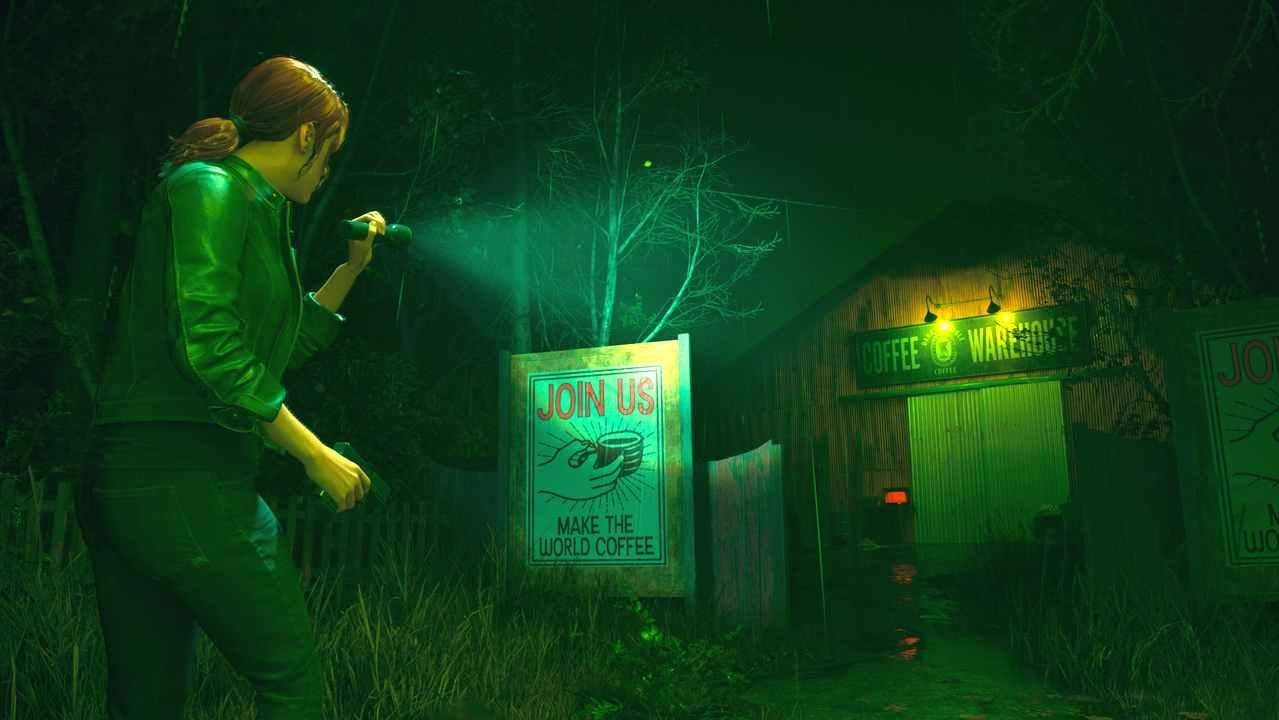
While “Number One Fan” diverges significantly from Alan Wake 2 in tone, the second episode sticks closer to the main game, though to its disadvantage. “North Star” places players in the role of Control’s Jesse Faden, or rather a character named The Sibling who resembles her. She’s tracking down a coffee cult in the main game’s Coffee World map. The Sibling lacks the powers of her Control counterpart and instead wields an automatic pistol and a flashlight. The gameplay loop here is quite similar to the main game, as is the horror-infused tone. Consequently, “North Star” is fairly forgettable, but mercifully brief—I only played for about half an hour before the credits rolled and the DLC’s sick theme song played.
The final episode of Night Springs, titled “Time Breaker,” represents some of Remedy’s finest work. It follows the main game’s Sheriff Tim Breaker, but as you might expect by now, it isn’t truly Tim Breaker. However, Time Breaker is even more intricate than the first two episodes of Night Springs. This isn’t a version of Tim Breaker; rather, it’s a version of Shawn Ashmore, the actor who portrays the character, aptly referred to as The Actor in the episode’s credits. The episode begins on a film set with The Actor discussing the concept of the multiverse with The Director (Remedy’s creative director Sam Lake, delightfully over-the-top as a cartoonish version of himself). Before long, The Actor finds himself journeying through alternate dimensions, much like the character he’s portraying on film.
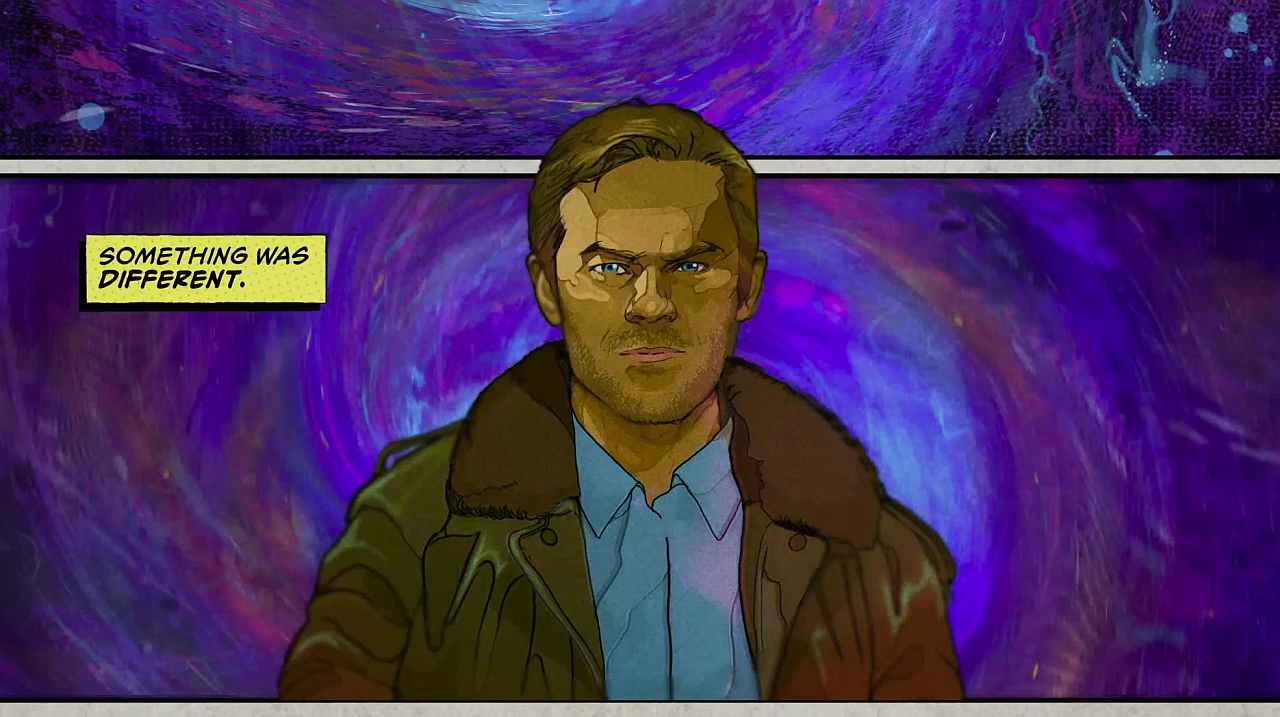
“Time Breaker” begins with a visual style similar to Alan Wake 2 but soon transforms, through the aforementioned dimension hopping, into a shifting kaleidoscope of game genres. While Alan Wake 2 isn’t afraid to experiment with mediums and genres, primarily playing with the uncanny valley between reality and fiction by alternating between gameplay and live-action sequences, “Time Breaker” explores the vast array of forms games have taken over the years. It turns the AAA third-person game into, at times, a retro 2D side-scroller, an interactive comic book, and even a text adventure. The highest praise I can offer “Time Breaker” is that it reminded me of Yoko Taro’s games (I say this as a devoted Yoko Taro enthusiast, having played NieR: Reincarnation). But more than just a chance for Remedy to experiment, “Time Breaker” provides lore enthusiasts with much to ponder. The entirety of Night Springs is hosted by the main game’s enigmatic Mr. Door, and the final episode delves deeply into the character. While it’s challenging to discern what is or isn’t true about what the episode reveals about him, it engages with the larger RCU in ways the rest of the expansion doesn’t, achieving great success. “Time Breaker” leaves the audience yearning for more.
Fortunately, more is on the way. Lake House will be the second DLC coming to the game this October and is expected to pick up the threads of Alan Wake 2 more directly while likely leading into Control 2. Lake House’s more serious tone reinforces the idea that Night Springs is intended as a respite for the player, a chance to engage in something different and enjoyable before returning to the main event. Even with Lake House on the horizon, I find myself already eager to revisit Night Springs.


