



Oh, thank goodness! Alien: Earth, Disney's high-budget TV series set just before the original Alien film, is absolutely brilliant. Showrunner, writer, and director Noah Hawley has crafted something truly exceptional: a series that feels deeply rooted in the essence of Ridley Scott's initial vision, yet pulsates with the relentless excitement of James Cameron’s Aliens sequel. Importantly, unlike every other film in the franchise since the first two, it remembers that this is a narrative about the souls of the characters, not just the events that befall them. Here are my reflections on the initial two episodes.
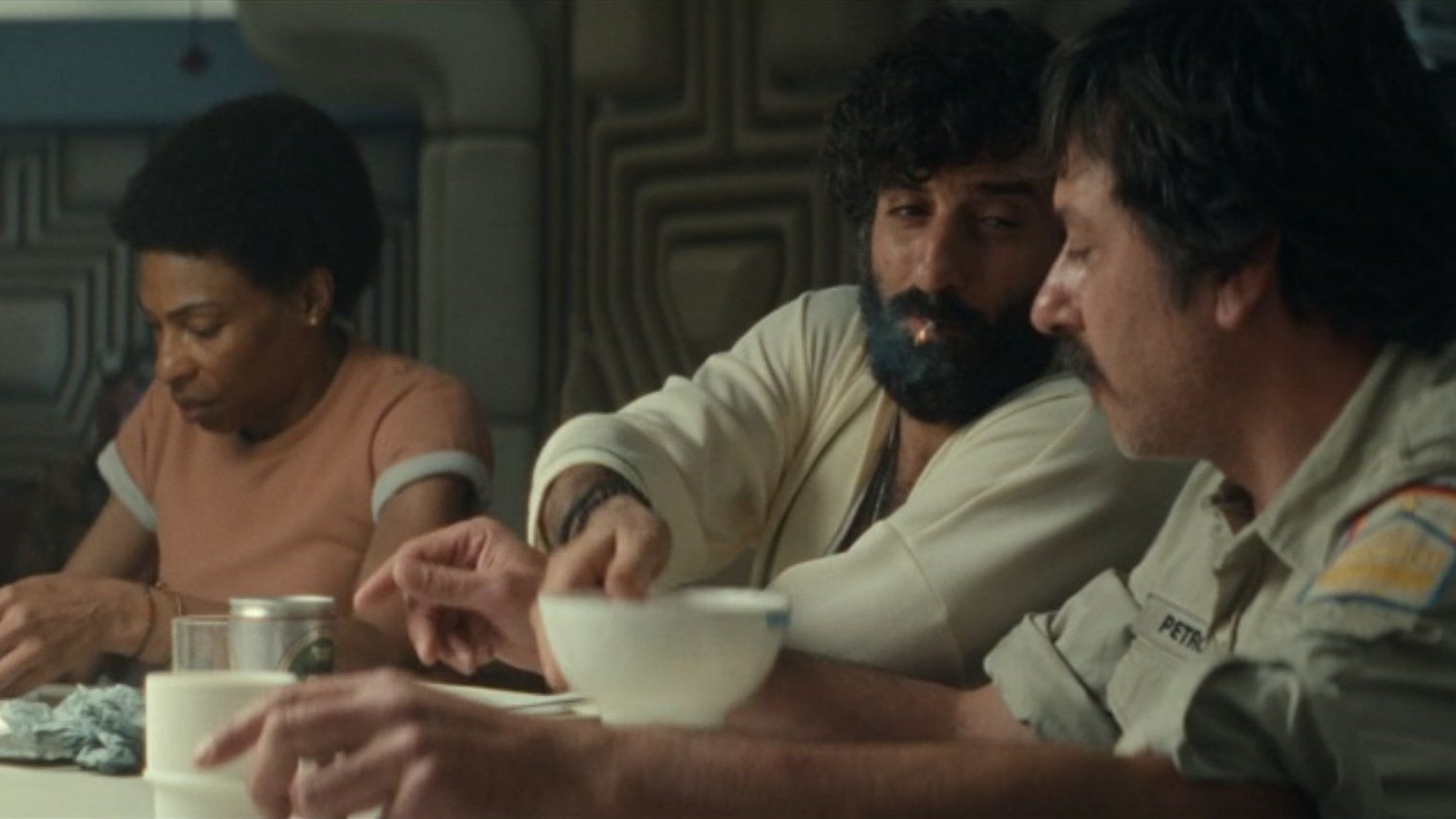
Alien: Earth makes a particularly intriguing opening choice. One might assume, given how the Alien sequels have struggled under the shadow of the first two films, that Hawley would want to immediately imprint his own signature on the series. As the creator of the remarkable TV series Fargo and Legion, his unique approach would seem the smart move to emphasize from the start. Yet, a far bolder decision is made. The opening minutes of Alien: Earth are an incredible homage to Scott’s style, featuring a cynical, weary crew bantering around a table, teasing, mocking, and talking over one another. Tensions and relationships are immediately established for the beleaguered crew that you know are destined to meet their end as their research vessel, laden with multiple alien specimens, crash-lands on Earth. It all looks and breathes like a quintessential piece of 1970s science fiction. In achieving this, the show immediately feels right. This is the Alien we cherish, not the oddly incongruous blandness of Covenant or the disastrous missteps of Alien 3 and Alien Resurrection.
This is then starkly contrasted by the events on Earth. While the crashing vessel, the Maginot, is owned and operated by the Weyland-Yutani corporation, it crashes into a towering city owned by another company called Prodigy. As revealed in the show’s initial shipboard banter, Earth in 2120 is dominated by four corporations, soon to be five. We learn that Weyland-Yutani controls North and South America, but we’re yet to be informed about the rest–though we're swiftly introduced to the emerging powerhouse, Prodigy. Founded by the youngest-ever trillionaire, Boy Kavalier (Samuel Blenkin), Prodigy owns at least a large city in New Siam and a vast research island, poised for a major breakthrough regarding synthetics—the androids with the gooey white blood from the original films. Kavalier has developed a method to transfer the consciousness of pre-teen children into synth bodies, and as we join the facility on Neverland Island, Kavalier is preparing to test this for the first time, transferring the mind of terminal cancer patient Marcy Hermit (Florence Bensberg) into an adult synth body, where she renames herself Wendy (Sydney Chandler).
And yes, let’s pause to address all this Peter Pan business. Eeehhh, this TV show is about as close to perfect as you could hope for, but if I had to critique something, it would be this. It’s exceedingly heavy-handed (indeed, all the names are rather painfully on-the-nose—“Kavalier” for our move-fast-break-things trillionaire, “Hermit” for our girl about to transition into a new shell…), to the point where clips of the Disney cartoon are repeatedly shown and we even get Kavalier reading aloud from the book. She’s Wendy, it’s Neverland… goodness, we understand. They’re children who get to live forever, I suppose? Except, of course, the point of the book is they remain children, but here they’re intended to mature into adults. It feels quite cumbersome. But honestly, that’s my only grievance.
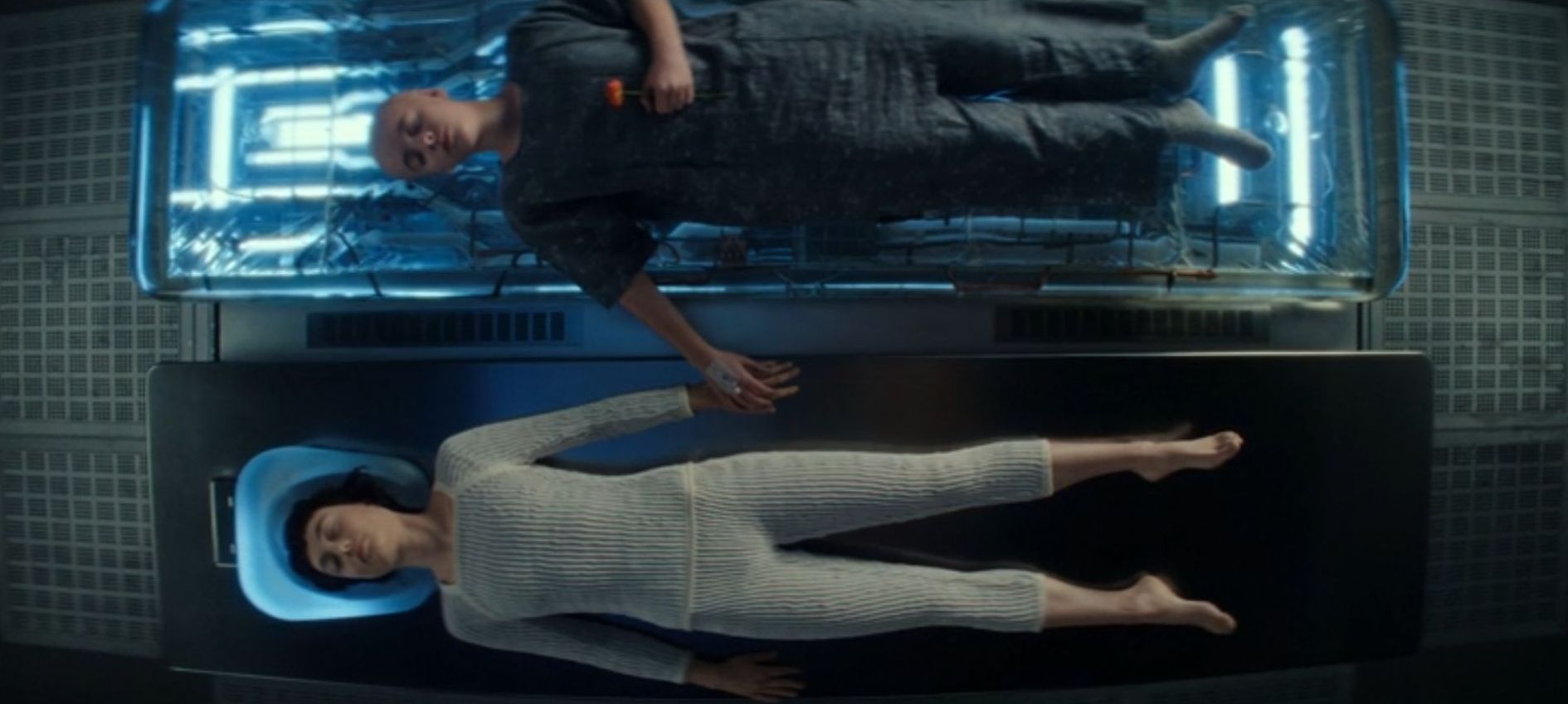
Prodigy quickly advances with transferring a number of terminally ill children into adult bodies, all now under the mentorship of the more traditional synthetic Kirsh (Timothy Olyphant), just moments before the Maginot crashes into the base of two skyscrapers in Prodigy City. A search and rescue team of Prodigy employees is immediately dispatched, including a medic who happens to be Joe Hermit (Alex Lawther), brother to Wendy. And, of course, the alien specimens have escaped.
What ensues is a lot of excellent, classic Alien action, with terrified humans armed with guns navigating dimly lit corridors likely housing monsters. It’s particularly enjoyable here because so much remains unknown. We know the Maginot was carrying Xenomorphs in various stages, from egg to Facehugger to full-grown Xenomorph XX121s, but we’re also aware there’s some sort of eyeball-with-tentacles creature in there, along with other alien species we’ve never encountered before. And while we’re left with no doubt that the Xeno is still the most formidable of the bunch, none of them seems remotely friendly.
But this is heightened by the show’s central, most disturbing and chilling aspect: some super-wealthy 20-something just placed the minds of a group of 10 to 12-year-olds into super-powered adult bodies, then sent them into danger.
The body-swap between child and adult is a beloved trope, almost always played for laughs. From Big to Freaky Friday, the concept is mined for humor (even if you do encounter something as unsettling as Big‘s 13-year-old boy losing his virginity to an adult woman). So when you first see Marcy become Wendy, there’s that jovial sense to it. Firstly, she’s no longer destined to die as a just-turned-12-year-old, and that’s wonderful, but also you’ve got an adult actor behaving like a kid. At one point she grabs her breasts and declares how weird they are, how they move while she’s running. The program is clearly playing with those body-swap tropes, telling us how delightful this all is. After several of the kids have been placed into adult synth bodies, there’s a delightful scene where they’re all sitting around chatting in a common area, a room full of adult actors moving and talking like children. Jonathan Ajayi particularly shines in this, his leg movements strikingly familiar to anyone with a child with ADHD, yet it’s all delivered without exaggeration. It feels wrong because body-swaps always feel wrong, but we’re being reassured of how right it is throughout.
But it’s so wrong! This isn’t being done with families around them or friends from their previous lives, and they certainly lack appropriate adult supervision or counseling. They’re experiments, their former terminal diagnoses and separation from their families clearly designed to render them disposable should something go awry. Wendy’s determination to reunite with her older brother seems to test the adults, unsure whether to hinder it for the project’s secrecy, but ultimately driven to let it unfold purely for the test results. It’s grotesquely mercenary, and the second episode continually reminds us of this, as we witness these adult shells acting like utterly terrified children in the face of alien threats.
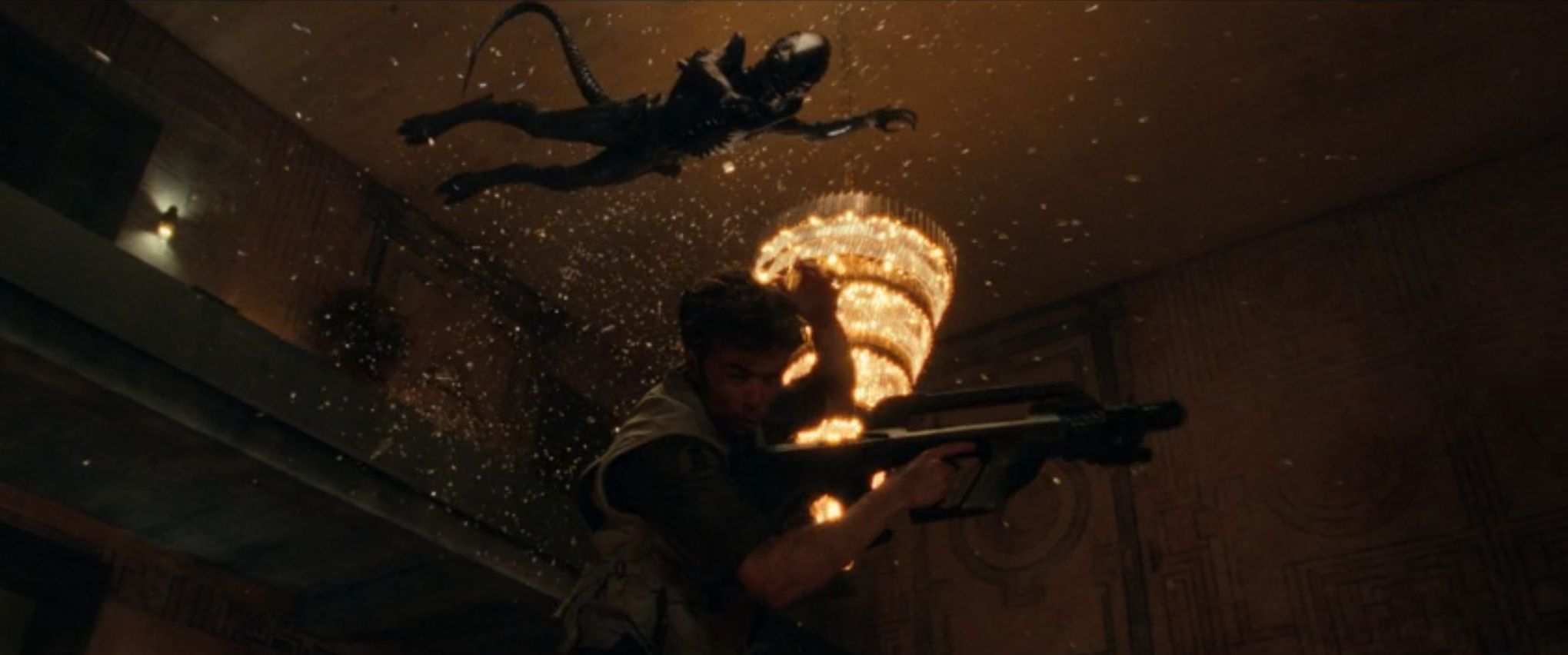
Almost everything is executed flawlessly. In fact, Alien: Earth feels like the final obliteration of any distinction between film and television, its massive-budget movie quality and ultra-widescreen format lending it a consistently cinematic feel. The only nod to traditional television is a peculiar flashback to Marcy’s childhood, which sticks out like a sore thumb amidst the rest of the format. It would be incredible to watch these weekly episodes on the big screen, and heaven knows, movie theaters could use the business.
What’s also thrilling is contemplating where this series might venture next. The claustrophobic events within the ruined ship and destroyed apartments dominate the second episode, but it’s evident that it will soon head outdoors. There’s surely no chance of containing this incident, and it’s going to be extraordinary to see how the corporations handle the outbreak. Another aspect to consider is the words from the first episode’s opening text.
In the future, the race for immortality will come in three forms:
Cybernetically enhanced humans: Cyborgs
Artificially intelligent beings: Synths
and
Synthetic beings downloaded with human consciousness: Hybrids
While the series has already introduced all three, and we witness the terrifying capabilities of Weyland-Yutani cyborg Morrow (Babou Ceesay), there’s yet to be any indication of how the various corporations intend to ensure their creations become the dominant force. Surely, that is yet to come.
In Alien: Earth, Hawley and his team have accomplished something that seemed impossible for the last 40 years—merging the terror of Alien with the thrill of Aliens, while maintaining a human-centered narrative. Not even Ridley Scott could achieve this with his two somber prequels. But in FX’s TV series, it’s all there, with an amazing eight more hours to look forward to.


